
Always double check.
In 2022, a very strange thing happened to me.

There’s a gnome hiding under my bed. He’s staring up at the wooden slats, biding his time until I start to fall asleep. Somehow, he knows the precise moment of my transition out of consciousness; he can sense exactly when my body starts to feel like a sandcastle caving in on itself. Because it’s right then, every time, that he slides out from under me, jumps up onto his feet, and zaps me in the meat of my thighs with a tiny taser.
When I open my eyes, the room is empty except for Charlie, our furniture, and the plant in the corner that’s been moved too many times to ever really be happy. I turn towards Charlie’s sleeping face. (How rarely we really look at a person’s eyelids, and never at our own.)
This cycle of falling and jolting, falling and jolting has happened enough times tonight that I don’t think it’s going to stop. Several hours ago, I took a tablet of Unisom, which is a sleep aid approved for pregnancy. I could take something stronger that isn’t — there are lots of options for that in the deep bottom drawer under the bathroom sink — but the last time I was pregnant, it ended at ten weeks with a blood clot in our toilet the size of a Cutie, one of those little mandarin oranges that come in mesh bags.
I didn’t lose the pregnancy because of something I took. I lost it just because that happens sometimes. Often, actually, with women my age. Instead of having the pregnancy removed at the doctor’s office, I chose to “pass it” at home. Pass it into the toilet bowl in our bathroom with its sage tiles and unfinished cabinet doors. The doctor didn’t tell me I might see something I would never forget.
Now, I sit up on the edge of the bed in the dark. I’m realizing that rest brings the gnome out of hiding; movement and uprightness deter him. So, if I rest less, will I be ok? Restless leg syndrome is common in pregnancy, but I didn’t know it could be this early or this bad. I stretch my ankles back and forth against the floor as I read my phone with one eye, the other twisted shut against the bright white rectangle. Warm baths with magnesium can help, it says. So can massage and compression.
Before I stand up and walk to the bathroom, I lean down and look under the bed. A sock. A gnarled dog toy. The collapsible nightstick Charlie keeps under his side to defend against intruders and intrusive thoughts. No gnome.
When I was a kid and had to pee in the middle of the night, I used to make as frightening a face as I possibly could in the bathroom mirror to scare myself into sprinting back to bed. But tonight I’m not going anywhere. Falling asleep is one kind of falling. This is a different kind, a slower descent into acceptance that something very strange is happening to me, and it might be really bad—for me or the pregnancy. Or it might be gone in the morning. It’s been a long time since I was awake as night becomes day.
I sit down on the closed lid of the toilet for a while, massaging my thighs with the heels of my hands. At a certain point, my brain stops logging thoughts and observations until the leaves of the Japanese maple outside the window start to glow neon with morning.
Charlie staggers into the bathroom in his boxers, half asleep. He sees me sitting with my head in my hands. I tell him I haven’t slept at all. I really mean not at all.
“Seriously?” He looks concerned, which is an appropriate reaction.
“Yeah.”
“Jesus.”
“Yeah.”
I explain to him what I think is happening. Restless leg syndrome associated with early pregnancy.
“Can you cancel your work calls? Can you nap?”
“I will try.”
I eat a piece of toast while staring out the front windows into the yard’s hardening daylight. Charlie is sitting on the floor in front of my chair, kneading my feet and calves with his hands. He has to take care of a few things, but then he’ll come back to check on me.
And then I try to nap.
But of course I can’t because, like clockwork, the zaps start right back up, this time with more force. Last night, they were torturously disruptive, but now, each one is also sharp and painful in and of itself—and I am weaker from the compounding fatigue. Whatever acceptance I felt last night starts to vibrate with panic.
“What’s happening to me?” I say to no one.
When Charlie returns and sees the growing wildness in my eyes, he sharpens with resolve. He finds an opening at a no-frills sports massage studio ten minutes away. The massage therapist doesn’t speak much English, but he has a kind face that makes me think the word shamanic.
“I am so tired,” I tell him. “I think it’s restless leg syndrome, but it’s very bad. I can’t sleep at all.”
My chin quivers, and tears break loose from both eyes. I wipe them with the sleeve of Charlie’s old sweatshirt. The massage therapist helps me onto the table, where he massages my legs and feet in big rhythmic strokes, moving around blood and current.
As I lie there, the tears keep pushing out of me in silence, streaming down the sides of my face and into my ears. I practice thanking him for the massage in a way that will make him believe it has helped, even though I know it hasn’t.
When I get back in the car, Charlie is on his phone reading about compression sleeves and typing an address into Google Maps. A couple with grocery bags crosses in front of our car, then a woman with a small dog and a coffee cup.
I sit very still with my mouth hanging open, and we drive through the bright, beige neighbourhoods of Berkeley, past front yards with political signs and bird baths. We park outside a store that sells home medical supplies for the elderly, for the chronically ill, for whoever needs nebulisers and ostomy supplies. The store has been there on that very corner since 1955, and when we walk inside, it’s disorienting because clearly not much has changed since then. But I can’t tell how much of that perception is a result of my altered state.
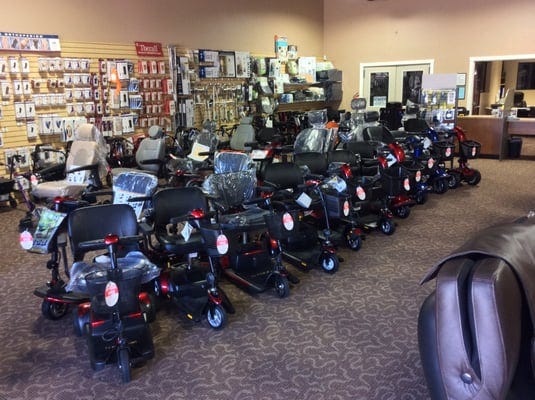
“Do you have compression sleeves?” Charlie asks the woman behind the counter. “For her legs. Ideally, for the full leg.” (This is the point in the story where I start to do a lot less talking. To Charlie, to anyone.)
“If we do, they’ll be in aisle five.” She says we can feel free to open boxes, try things on. Full leg was a long shot, but there are a few that are long enough. I pull up my sweatpants and push one leg through a neoprene tube. Together, Charlie and I yank it upwards until the top of my white thigh blooms over it like a big mushroom with a black stem.
We decide to buy one for each leg. They take credit cards, but she’ll be right back. She has to get the manual carbon copy crank.
“Okie doke! And just to let you know, these are final sale.”
At home, I lie down with both legs in the compression sleeves and, just as I know they will, the zaps return. I teeter out into the muddy front yard, unable to fully bend at the knees, and hold my face up to the sun in a kind of prayer. Help me, I think or say. I can’t remember.
When it gets dark, I let myself lie down in bed, and it happens again and again, and I cry so hard that I start coughing uncontrollably. Charlie hugs me almost too tight before we get in the car again and drive, because we both know without having to say so that it’s time to go to the hospital.
We check into the ER and sit down in the waiting area. I smell smoke and wonder if I’m having an aneurysm. There’s a man in a chair at the end of our row, and his pants are smoking from one of his front pockets where, it becomes clear, he put a cigarette that was still lit. Which is to say, his pants are literally on fire.
In the exam room, Charlie explains that I’m pregnant.
“It’s very early, maybe seven weeks. We thought it was restless leg syndrome at first, but it’s really extreme. We lost a pregnancy before this. Otherwise, she would have taken something stronger to knock her out. We just want to make sure she doesn’t take anything that could harm the baby. And we just want to make sure nothing else is going on.” Something worse.
Charlie knows I’m terrified of accidentally harming the baby’s brain. He has made peace with my illogical and extreme fears about neural tube defects.
“Let’s take your vitals and some blood,” the doctor says, “and see what else your body might be able to tell us about what’s going on.”
“Ok,” I say out loud. I smile and exhale. I like this room, this bed with its slightly raised back. We need help, and we are in the place where you get it.
But an hour or so later, she tells us that everything looks normal. This may very well be an extreme case of restless leg syndrome, which does happen in pregnancy. She gives us a few pills of a different mild sedative that will hopefully help, but says we should see an OB tomorrow. And also a neurologist, given the intensity.
When we get home, I move slowly, stiffly to the bathroom, where I fill the tub and get in. Charlie sits down next to me on the floor. I love it when he does that, when he comes to be with me while I’m in the bath. We say that one day we’ll have a bathroom big enough to put a big comfy chair or a chaise lounge. For now, he’s resting his head on the cold edge of the tub, and I can see how tired he is. I want to let him go.
“Please go to bed,” I say, my hand resting on his cheek.
“I wish so much there was something I could do.”
“I know. Please go to sleep. I’ll be ok. Nothing terrible will happen. Go to sleep, because I will need you in the morning.” And for a moment, he actually starts to drift off right there, catching his head just before it falls forward. Then he lifts himself up, kisses my forehead, and says he’ll come back to me in a few hours.
When I’m alone in the bathroom, I think about how, as a little kid, the idea of something really bad happening used to excite me. I secretly longed for tangible tragedy, like the death or maiming of a loved one, or even my own terrible diagnosis. Maybe I just wanted the drama, or something that would make everything—social anxiety, divorce—fall away.
Now, I feel the urge to push myself up out of the bathwater and take the few steps over to the toilet so I can look down in its bowl and see, again, in my mind, the bloodclot the size of a Cutie, my cutie. But I’m worried that I am too unstable with exhaustion that I’ll slip and crack my skull on the edge of the tub.
The bath water is cool now. I put on a robe and pad wet footprints into the living room, where I watch three episodes of a show about sad high schoolers having sex and doing drugs. Sometime around 4:30 am, Charlie shuffles in. He doesn’t ask how I am or anything because he knows without having to. He sits down with me. There are so many images from these few days that will stick with me long after, but one of the sharpest is him lying across from me on our other couch, hood up, hands in the front pocket, watching.

In the morning, we drive across the bridge to an OB in Chinatown, the only one Charlie could get us in to see same-day. Most of the forms and signs are in Chinese, and the doctor is confused why we’re there. Visibly uneasy, she asks us what we think she can do to help. It’s hard to overstate how alarming that is, for a doctor to be anything other than clear-headed and in command.
She takes some basic readings and sends another sedative prescription to the pharmacy downstairs, but presses us to find a neurologist. As we leave and walk to the pharmacy, which requires crossing a street, Charlie holds my hand like I’m a child who needs to be kept safe from their impulses, from themselves. Inside Walgreens, I keep moving around the store while he waits in line, maybe so no one can get a good look at my face.
I am by the Gold Bond. Now, the diapers. Gnomes are kind of like babies, I think, proportionally speaking, with chubby limbs and big heads. They probably like to eat little things like mandarin oranges and baby corn because they’re also shrunken. Everyone talks about how weird it is that pregnancy tracking apps compare fetuses to fruits and vegetables, because at no point are babies actually string-bean shaped. Right now, mine is very small, probably the size of a pill. Oh my god.
“OH MY GOD,” I yell out.
Charlie comes running down the aisle. “What?” he says over and over. “What happened?”
“Charlie, it’s my medication. My pill organiser. Charlie, I think when I was dosing things out for this week, prenatals, Omega 3s, vitamins, I think I grabbed the wrong prescription bottle. So instead of my Effexor for each day, I dosed out Gabapentin.”
Gabapentin is prescribed for a lot of things, but, ironically, we use it as a mild sleep aid. Effexor is an antidepressant similar to an SSRI, and it can cause powerful withdrawal symptoms if not gradually tapered down. The pills are the same color and oblong shape. And they come in the same kind of orange bottle.
“What are the symptoms of Effexor withdrawal?” He asks, frozen, wide-eyed, several inches from my face.
“Electric shock sensations in the head and body.”
We drive like silent lightning back home and confirm that I’m right. I have been taking the wrong pills for five days. I abruptly stopped my Effexor, which would normally require tapering down over many weeks.
I take two of the correct pills immediately, and within 30 minutes, I’m asleep and will stay asleep for ten hours.
When I wake up, and for a long time afterwards, Charlie will ask me, “How did you know?” Of course, I can’t explain it — how my brain made exactly the connection it so desperately needed to make in that moment. Even the idea that I knew at all, inside myself, seems wrong. No, the realization was a gift from something or someone else, scuttling by me on little legs in the Walgreens aisle, unseen.
—
Special thanks to Nan Ransohoff & Rebecca Lissner for inspiring (coming up with) the new name for this substack. <3